

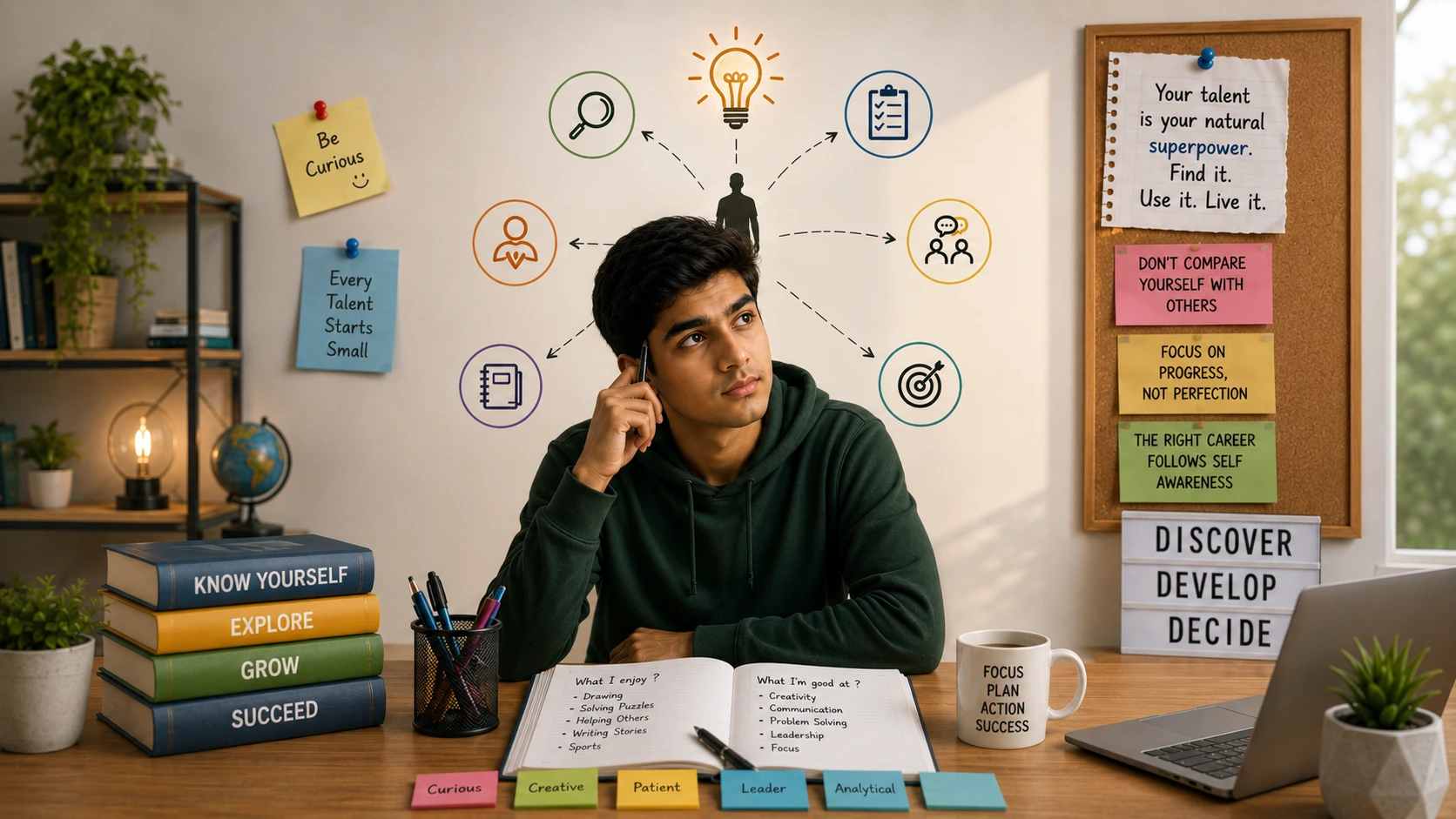
Every student has potential. The challenge is that most students never get the opportunity to truly discover it.
Schools usually evaluate students based on academics, but hidden talents often exist beyond textbooks and exams. Some
students
are natural leaders. Some are creators. Some are problem-solvers, communicators, innovators, strategists, designers
or entrepreneurs. These abilities often remain unnoticed because students are rarely exposed to experiences that help reveal them.
Discovering hidden talents is important because career satisfaction and long-term success come from working in areas aligned with natural strengths and interests. The first step toward self-discovery is exploration.
Students should actively participate in:
- Public speaking
- Group activities
- Creative projects
- Competitions
- Internships
- Workshops
- Leadership activities
- Career simulations
- Practical challenges
- Team collaborations
Trying different experiences helps students understand what energizes them and where they naturally perform well.
Students should also observe:
- What activities make them lose track of time?
- What type of problems do they enjoy solving?
- What do people appreciate them for?
- What environments make them confident?
- What topics genuinely excite them?
Mentorship plays a major role in this process. Sometimes students cannot identify their strengths on their own, but mentors, teachers and guided programs can help uncover hidden capabilities through observation and feedback.
In today’s world, hidden talents can become powerful careers. Skills like storytelling, communication, creativity, content creation, design thinking, leadership, networking, coding and strategic thinking are creating entirely new career opportunities.
Career decisions should not be based only on marks or societal pressure. They should be based on understanding who you are and what kind of future you want
to build. The earlier students discover their strengths, the more confidently they can shape their future.

